Category Archives: Books and Films

Continuing “Round the World”

As I had hoped B6 has a new enthusiasm for school since he became a world traveller. He has now visited Nunavut, Iceland, Scotland and is in the Netherlands as I write. Along side the Inuksuk on the window ledge is a Loch Ness monster. While he was in Scotland the girls and I were called in to participate in a Highland Games event, the Tug o’ War. Unfortunately B6 and I lost to the girls, twice! We tried to have a mini Caber Toss in the backyard but the wee caber tosser got dirt in his eyes and became quite distressed so the event was cancelled. A happier event by far was our lunch today, “Dutch Eggs and Cheese” which he prepared himself.

A pleasant part of our journey  is reading him the books I have gathered, both fiction and non-fiction. In Iceland we read the ridiculous tale The Backward Brothers see the Light which B6 found quite amusing. While in the Netherlands I read Boxes For Katje to him and we discussed the desperate need of the Dutch people after WWII. The book is based on the author’s mother’s experience and I thoroughly enjoyed both the story and illustrations. Another war story from Holland is The Greatest Skating Race which we began tonight.

End of the Spear

End of the Spear by Steve Saint provided new insights after our unit on Eco-tourism in Ecuador. The book barely mentions eco-tourism but Steve deals with more significant survival issues for the tribe of people a little deeper into the rainforest than those in our simulation game. Our game was based on the Quechua people, Steve’s lifetime association is with the Waodani people.

Years ago I read Shadow of the Almighty and Through Gates of Splendor by Elisabeth Elliot. She tells both the story of her husband’s life and the story of five missionaries, her husband among them, who were murdered by Waodani people (aka “Aucas”) in 1956. Steve Saint’s father was also one of those five missionaries. Like Elisabeth Elliot, Steve’s mother did not leave Ecuador after the death of her husband but stayed on and continued to work for the mission organisation. Steve’s aunt lived with the Waodani people and grew to love and be loved by them.

End of the Spear begins with Steve attending to the burial of his Aunt in the village where she had lived with the Waodani. He had also lived there with her, for some time as a young boy. I found it a little hard to follow initially as the story flips back and forth from Steve’s childhood time with the Waodani to his current life in the US and touches on other events in between. The further in I got the more the focus narrowed in on two issues. Steve was trying to piece together all he could about the events surrounding his father’s death. He was also trying to assess if and how he could help the Waodani

“…learn the skills and develop the economy necessary to take care of their own needs…”

In order to assist the Waodoni, Steve and his family lived with them for 18 months. An airstrip was built by Steve and local villagers. Steve and his sons then built a house for the family. The majority of his time was spent flying between villages each day.

My average flight was about eight minutes long. But to travel the equivalent amount I had that day with old BTS (his plane) would have taken two hours on the trail for every minute in the air. It would have taken about three or four Waodoni to carry the cargo I had delivered.

Naturally there were decisions that had to be made about which calls for help he would attend. Steve insisted that the Waodoni make these decisions and give him instructions. In a culture without a leadership structure this took some getting used to. When Steve’s time in Ecuador was drawing to a close the Waodoni realised that they wanted to not only continue to have access to a plane, but also be the owners and operators. Steve’s desire to help the Waodoni equip themselves motivated him to establish I-TEC on his return to the US.

It was intriguing to read of Steve’s experiences, hear his descriptions of the Waodoni’s lifestyle and the change in the lives of many who heard the gospel from Steve’s Aunt. The man who killed Steve’s father has become one of Steve’s dearest friends and is a surrogate grandfather to his children. Because such love exists between them they were finally able to discuss the events on Palm Beach where Steve’s dad was speared. Before becoming God followers the Waodoni would have assumed that Steve would make contact with them only so that he could have revenge for his father’s death.

The story does not end when Steve and his family return the US. Some of his Waodoni friends come to Florida and their reactions to all they see are both amusing and sobering. Steve continues to work with his friends to help indigenous tribes around the world learn new skills and obtain equipment. He also continues to tell the story his father set out to tell so many years ago. The story of salvation by the grace of God.

Seabird

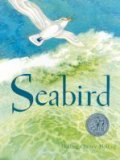
seabird2677.jpgHolling Clancy Holling’s books have a style of their own. While telling a story which spans generations, in Seabird, he has also given us a glimpse into the lives of whalers, sea captains, sailors and their families. There is history, geography, marine biology and ship building all woven into the story of a young Ship’s Boy. Ezra Brown is the ship’s boy on a whaling ship in 1832. During his watch, high in the crow’s nest one day, he is entranced by an ivory gull. The sudden, unexpected movements of the ivory gull trigger a memory which prompts him to shout,”Iceberg! Dead Ahead!” His warning saves the ship and a relationship begins.

Soon after his experience with the gull Ezra carves a model of one from walrus tusks with amber, slate, coral and whalebone for the details. He names the model Seabird. As we follow Ezra’s progress we see how his life stays linked with Seabird. Ezra becomes a captain and has a son, who also forms a bond with Seabird. And so the story goes on, spanning 100 years of adventurers in Ezra’s family.

Every second page in the book is a short chapter and the facing page is a painting. Around the text are small but detailed line drawings with notes for the reader. These line drawings give more detail to the story being told. Sometimes they provide background information describing how something was made or formed. There is often extra text around the pictures explaining a process or occurrence.

The book is short enough to read at one sitting but I would recommend doing what my son and I did and read it over a few weeks. I imagine we will probably read it again when he is older and he will glean even more from it than he did this time at age six.

The top 100 books

The Top 100 books
Compiled by the Telegraph from the results of a survey asking British readers what were ten books they could not live without. The Common Room and Dominion Family are also featuring it. The ones I have read are bold, the ones I’d like to read are italicized. There are a few I think I might have read but I’m not sure, must have been memorable!? Quite a few I’ve never heard of.


1 Pride and Prejudice – Jane Austen

2 The Lord of the Rings – JRR Tolkien

3 Jane Eyre – Charlotte Bronte

4 Harry Potter series – JK Rowling

5 To Kill a Mockingbird – Harper Lee

6 The Bible

7 Wuthering Heights – Emily Bronte

8= Nineteen Eighty Four – George Orwell

8= His Dark Materials – Philip Pullman

10 Great Expectations – Charles Dickens

11 Little Women – Louisa M Alcott

12 Tess of the D’Urbervilles – Thomas Hardy

13 Catch 22 – Joseph Heller

14 Complete Works of Shakespeare (some)

15 Rebecca – Daphne Du Maurier

16 The Hobbit – JRR Tolkien

17 Birdsong – Sebastian Faulks

18 Catcher in the Rye – JD Salinger

19 The Time Traveller’s Wife – Audrey Niffenegger

20 Middlemarch – George Eliot

21 Gone With The Wind – Margaret Mitchell

22 The Great Gatsby – F Scott Fitzgerald

23 Bleak House – Charles Dickens

24 War and Peace – Leo Tolstoy

25 The Hitch Hiker’s Guide to the Galaxy – Douglas Adams

26 Brideshead Revisited – Evelyn Waugh

27 Crime and Punishment – Fyodor Dostoyevsky

28 Grapes of Wrath – John Steinbeck

29 Alice in Wonderland – Lewis Carroll

30 The Wind in the Willows – Kenneth Grahame

31 Anna Karenina – Leo Tolstoy

32 David Copperfield – Charles Dickens

33 Chronicles of Narnia – CS Lewis

34 Emma – Jane Austen

35 Persuasion – Jane Austen

36 The Lion, The Witch and The Wardrobe – CS Lewis

37 The Kite Runner – Khaled Hosseini

38 Captain Corelli’s Mandolin – Louis De Bernieres

39 Memoirs of a Geisha – Arthur Golden

40 Winnie the Pooh – AA Milne

41 Animal Farm – George Orwell

42 The Da Vinci Code – Dan Brown

43 One Hundred Years of Solitude – Gabriel Garcia Marquez

44 A Prayer for Owen Meaney – John Irving

45 The Woman in White – Wilkie Collins

46 Anne of Green Gables – LM Montgomery

47 Far From The Madding Crowd – Thomas Hardy

48 The Handmaid’s Tale – Margaret Atwood

49 Lord of the Flies – William Golding

50 Atonement – Ian McEwan

51 Life of Pi – Yann Martel

52 Dune – Frank Herbert

53 Cold Comfort Farm – Stella Gibbons

54 Sense and Sensibility – Jane Austen

55 A Suitable Boy – Vikram Seth

56 The Shadow of the Wind – Carlos Ruiz Zafon

57 A Tale Of Two Cities – Charles Dickens

58 Brave New World – Aldous Huxley

59 The Curious Incident of the Dog in the Night-time – Mark Haddon

60 Love In The Time Of Cholera – Gabriel Garcia Marquez

61 Of Mice and Men – John Steinbeck

62 Lolita – Vladimir Nabokov

63 The Secret History – Donna Tartt

64 The Lovely Bones – Alice Sebold

65 Count of Monte Cristo – Alexandre Dumas

66 On The Road – Jack Kerouac

67 Jude the Obscure – Thomas Hardy

68 Bridget Jones’s Diary – Helen Fielding

69 Midnight’s Children – Salman Rushdie

70 Moby Dick – Herman Melville

71 Oliver Twist – Charles Dickens

72 Dracula – Bram Stoker

73 The Secret Garden – Frances Hodgson Burnett

74 Notes From A Small Island – Bill Bryson

75 Ulysses – James Joyce

76 The Bell Jar – Sylvia Plath

77 Swallows and Amazons – Arthur Ransome

78 Germinal – Emile Zola

79 Vanity Fair – William Makepeace Thackeray

80 Possession – AS Byatt

81 A Christmas Carol – Charles Dickens

82 Cloud Atlas – David Mitchell

83 The Color Purple – Alice Walker

84 The Remains of the Day – Kazuo Ishiguro

85 Madame Bovary – Gustave Flaubert

86 A Fine Balance – Rohinton Mistry

87 Charlotte’s Web – EB White

88 The Five People You Meet In Heaven – Mitch Alborn

89 Adventures of Sherlock Holmes – Sir Arthur Conan Doyle

90 The Faraway Tree Collection – Enid Blyton

91 Heart of Darkness – Joseph Conrad

92 The Little Prince – Antoine De Saint-Exupery

93 The Wasp Factory – Iain Banks

94 Watership Down – Richard Adams

95 A Confederacy of Dunces – John Kennedy Toole

96 A Town Like Alice – Nevil Shute

97 The Three Musketeers – Alexandre Dumas

98 Hamlet – William Shakespeare

99 Charlie and the Chocolate Factory – Roald Dahl

100 Les Miserables – Victor Hugo

More Perfect than the Moon

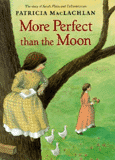
moreperfectthan.gifRecently I realized that my son has not heard many of the novels I read to the two girls when they were his age and a little older. So we are revisiting them. One which we enjoyed years ago was Sarah, Plain and Tall by Patricia MacLachlan. There are now four books about Sarah and her family: Sarah, Plain and Tall, Skylark, Caleb’s Story and More Perfect Than the Moon.

The library has them all on cd, read by Glenn Close, who plays Sarah in the movie versions of Sarah, Plain and Tall and Skylark. Each book tells the story of the family Sarah marries into, but from the perspective of a different family member. When Sarah joins the Witting family she becomes the stepmother to Anna and Caleb. Anna writes about all the family’s experiences in her journal and before moving to town urges Caleb to do the same.

More Perfect than the Moon is told by Cassie the youngest child and her approach is a little different to Anna’s and Caleb’s. She has been told to write about what she sees and about what is going on. In order to do that she lurks and spies and listens in on other people’s conversations. Her behaviour does not go unnoticed however and her family members reprimand her.

Cassie decides that it is just as valid to create her own stories of what is going on. The characters are her family, but the plot is definitely her own. Her stories are very amusing and had all of us laughing and repeating lines to each other. Her desire to create fantastic tales about her family is borne out of fears that Sarah’s pregnancy will end in tragedy. Her journal entries contain promises of happiness and gifts “more perfect than the moon”.
The story is somewhat predictable but this did not spoil it for us. Cassie does find something “more perfect than the moon” but it was not what she had expected. We did feel that Patricia MacLachlan might not be finished telling the tale of Sarah and the Witting family, so we will be looking out for a new journal keeper’s story.

About books

I own several books about books. I had one, Honey for a Child’s Heart by Gladys Hunt, and thought that I probably wouldn’t buy any others. After all it would take a long time to read all the books recommended in that one book , wouldn’t it? Then I bought Books Children Love by Elizabeth Wilson because it was recommended in For the Children’s Sake by Susan Schaeffer Macaulay which has always been a favourite book. The Book Tree was next by Elizabeth McCallum and I think it might be my favourite although they are all very useful.

When I was buying books for this year’s school work I bought a new one, All Through the Ages, History Through Literature Guide by Christine Miller. Christine Miller has searched for “living books” in catalogs, other book about books, and history curriculum. Her lists are organized by historical period and then in grade levels and types of book. It is an amazing resource. When I was planning our history study for this year I sat with the book in front of me and the library catalogue on the computer screen and I reserved book after book, for the six year old, the ten year old, the twelve year old and for me.

I may not buy any more books about books (but that is not a promise) because now I have discovered blogs about books. I have probably not even scratched the surface in this area but I have seen enough to give me keep me supplied with suggestions for a long time. Semicolon not only reviews books and features author profiles but also hosts the Saturday Review of Books every week. Mental Multivitamin, Dominion Family, Simply Simon and The Common Room are others that I glean from. Inspired by Semicolon and always on the hunt for worthwhile books for my children to read I am going to continue borrowing books from the Newberry Medal and Honor Books list. There are over 300 on the list and I have read 42 of them so only 258 left!

Gone-Away Lake

I just finished reading Return to Gone-Away by Elizabeth Enright to the children and we all thoroughly enjoyed it. We listened to Gone-Away Lake, a 1958 Newberry Honor book, on audio tape during December and couldn’t wait to read on.

Gone-Away Lake and Return to Gone-Away are the type of books my children seem to love. Each book describes everyday children having adventures which are quite believable but just out of the reach of most city children. There is a lake to discover, a deserted town to roam around and eccentric but welcoming old people to form firm friendships with. There is a club and a clubhouse to set up. As A10 explained to me, “There are the right people with the right people.”

Julian and Portia are two of the right people, they are cousins who spend their summers together. While exploring the country side near Julian’s home one afternoon they venture further than ever before and meet two more of “the right people” Mrs Minnehaha Cheever and her brother Mr Pindar Payton. That is their introduction to Gone-Away Lake which was once Tarrigo, a lakeside resort town. After the lake turned into the a swamp the summer residents stopped coming and the elegant homes fell into varying states of decline. Minnehaha and her brother grew up coming to Tarrigo every summer, and returned to spend the rest of their days in two of the dilapidated houses, cut off from the rest of the world.

The houses and surrounding countryside are full of things to discover and that is exactly what Julian, Portia and her brother Foster do. In following their adventures we are amused and intrigued. As L12 said to me Elizabeth Enright describes the little things. Aunt Minnehaha dresses herself in the clothes left behind by her mother and sisters fifty years earlier and Elizabeth Enright describes the outfits with just the right amount of detail.

In Return to Gone-Away Portia’s family have all come for the summer to live in the Villa Caprice, which they now own. There is much for Portia, Julian and Foster to discover as the house is restored, repaired and lived in. The story meanders around the country side as the children pursue different adventures and mysteries. The spotlight stops on the boys, or the girls, Aunt Minnehaha, Uncle Pin or the house itself. The story’s ending is quite satisfying but we can’t help wishing Elizabeth Enright had written just one more.

Bed time reading

Yesterday I began reading two books to B6. The pictures and the text are keeping us both amused and intrigued. The first is Jonathan Swift’s Gulliver retold by Martin Jenkins. The illustrations are filled with tiny details so that each time you gaze at them you find something new. I have not yet read the original but the retelling has B6 asking for more.
The second is Mixed Beasts written by Kenyon Cox and illustrated by Wallace Edwards. The pictures have had B6 chuckling, studying and searching, as once again there are details to be found after closer observation. Some of the favourite beasts so far have been the Kangarooster, the Bumblebeaver and the Peanuthatch.

A year on and they are balmier than ever

It is a year since we wrote the entry about Narnia and the obsession my children seem to have with all things Narnian. It appears that nothing has changed. They still listen to the radio theatre cds often, reread the books and talk about the movie. As they are always ready with a quote in any and every situation we thought we would see if any of you are as balmy as they are!

Do you know which book the following quotes come from? Or who said them?

  1. “They all say…-that I’m too flighty; don’t take life seriously enough….you’re altogether too full of bobance and bounce and high spirits. You’ve got to learn that life isn’t all fricasseed frogs and eel pie. You want something to sober you down a bit.”
  2. “I wonder if she doesn’t see that everything that little beast does is all for the sake of showing off.”
  3. “and their names were Peter and Susan and Edmund and Lucy. And so they reigned for ever so long and everyone had a lovely time, and it was all because of Aslan.”
  4. “Well done Chief. You never said a truer word”
  5. “Oh darling, don’t get so excited, I was going to say, even if we were caught everyone would say it was one of my mad jokes. I’m getting quite well known for them. Only the other day-do listen, dear, this is frightfully funny-“
  6. “Yes, I know, and few return to the sunlit lands. You needn’t say it again. You are a chap of one idea, aren’t you?”
  7. “If you were not my father, oh ever living Tisroc, I would say that was the word of a coward.”

As I have been typing all these quotes in L12 and A10 have been giving excellent renditions of each one, I wish you could have heard them.

For your viewing pleasure

We have watched a few movies over the Christmas break. I asked the children if they had any favourites they would like to see again and then I reserved them at the library. It is tricky finding movies suitable for everyone and one solution to this problem is some old classics.

We have recently watched:
Holiday Inn
Charlie Brown Christmas
Horse in the Grey Flannel Suit
Seven Brides for Seven Brothers
My Fair Lady

I know some of you are thinking we might be unaware that new movies have been made in the last thirty years. We know that and we do watch some of them, but we like the old ones, and yes, we like musicals! This is never more evident than in the days after watching a musical or listening to a soundtrack. The house is filled with “musical theatre voices” switching almost seamlessly from Seussical the Musical to Phantom and then to My Fair Lady or Joseph and his Dreamcoat!

If you have some favourite family movies let us know by leaving a comment.