The good news

The good news is that when I saw the gastroenterologist yesterday, he had the results of my most recent blood test.  My ferritin level, which was 4 when I was diagnosed with Celiac disease, is now 82!  This is no doubt due to my three iron infusions so it will be interesting to see if I can maintain this level or continue to increase this level without further infusions.  I definitely have more energy than I did six months ago;  I even ran four mornings this week, and by the fourth it didn’t hurt as much.

More good news – we won our first game in the end of season playoffs last night 25 to 2.  The tournament runs through this weekend and the beginning of next week, then softball will be over for another year.

Doubling up

As I mentioned yesterday I am concentrating on drilling math facts with B7. In order to practice doubling  today, I made up a game. I often invent a game for B7 on the fly, sometimes they work, sometimes not. Today’s invention definitely worked, B7 even taught to A12 and played it outside of Math time!

This is how it worked:

  • You need a full deck of cards(jokers removed), blank paper and pencil for each player.
  • Deal each player 7 cards and place the rest in a pile in the centre, this is the pick up pile. The aim of the game is to end up with the most points. You receive points when you can lay down a double (two cards the same value Ace -10) If you have a picture card you can lay it down on your double and increase your points. A Jack means you can double your total again, a Queen entitles you to double twice and a King means you can double three times. For example, if you are holding two 6’s and a king, you can lay down the 6’s; this gives you 12 points. Placing the king on top means your score doubles three more times giving you 96 points.
  • If you have no doubles in your hand you pick up from the centre pile. You cannot lay cards down straight away after picking up, you must wait until your next turn.
  • Players add and record their score from each double they lay down and add them up at the end. The game ends when a player has laid down all their cards or when the pick up pile is finished. At the end if players have cards in their hand they add up their value and subtract it from their final score. Picture cards left in a players hand are all worth 10 points which must also be subtracted.

I was very happy with the amount of doubling B7 did and that he began to recognise patterns and calculations he had already done.  It’s nice when the learning and the playing are one and the same.

Glimpses of our school day

Not only did we manage to get up in time for school this morning, the girls and I went for a run before we began. Running is very much in the trial stage, today was the second day. We are only running about 2km, which took us 15 minutes this morning. I spent the last 5 minutes telling myself I must not give up even though everything hurt!

We began with a short prayer and bible memory time using the fruit bowl to help learn the Fruit of the Spirit verses. Then it was into Maths, the girls just opened up the beloved Saxon tests and got to work. B7 and I did not get out the text straight away; I have designed things a little differently for him, devoting more time to games, drill and activity sheets which will hopefully help him to memorise his number facts and tables. As the maths got harder last year he could understand the concepts but was slowed down by the calculations. We did much of today’s lesson orally, covering the first lesson in the text but without the laborious copying of questions into a workbook. I spent quite a bit of time searching through recommended online Math Games during the summer so I could supplement the drill with some shooting of asteroids and the like. It will take me more time to prepare this type of lesson, but I was very happy with today’s results and so was B7.

L14 has designed her own schedule this year, which we will tweak as the days progress. I think a couple of subjects may need more time allotted to them but time will tell. For the first time (other than violin) she is taking a class with a different teacher. We have heard excellent reports of a writing teacher here in Ottawa who runs a thirty week program, teaching a range of writing styles and techniques. She sends lessons, assignments and feedback to her students by email and runs an optional 1 hour class each week.

The rest of the day ran smoothly with Language not being too painful for B7, I read him a story that I found very strange, but which he loved. Although he complained about spelling and writing I was thrilled to see how much he had retained over the long summer break. This year he will join A12 in using Excellence in Writing, the program I have utilised to teach the girls factual writing over the last few years.  Reading other people’s ideas over the summer I became convinced that B7 should have his schedule by his desk so he can see how his time is divided up.  He referred to it often today and could see that the lesson times were not too long and there were BLANK spaces during which he could take a break.

A12 managed to get all her work done in plenty of time, so she accompanied me to the library to borrow a secret codes book.  Tonight she created a very authentic looking Secret Agent membership document on the computer. (Not that I have actually seen any secret agent membership documents!)

So there you have a few glimpses into our first day back at school.  As I suspected, now we are back at the books the real summer weather has arrived, 30° today and tomorrow!

Summer Daze

Today is the last day of the summer holidays, but it is definitely not the last day of summer. I keep telling people that summer could last another month or so yet. Wishful thinking, I know. I don’t know where all the summer days have gone. Even though we were only in China two weeks, it seemed to affect my whole summer. The weather also threw me out, it rained almost everyday through July and half of August. After the extreme heat of China the mild days here were pleasant but not the summer days we are used to.

On returning from China A12 and L14 threw themselves into studying for their music theory exams. For four weeks they spent large chunks of every day working, L14 did Grade 2 and A12 Grade 1. I think B7 found this a bit tough as he had already missed their company for two weeks only to find them always working on cadences, scales and Italian terms. They did take a break on the August long weekend, which included L14’s birthday, and we all visited our friends at their cottage in the Laurentians.

After the exams were finally over they both breathed sighs of relief and then realised there were only three weeks of holidays left. B7 and A12 went to a soccer camp run by SU at our church which they thoroughly enjoyed. Both came home each day hot, sunburnt and happy. L14 and I fitted in several games of tennis, some swimming and a little shopping. Throughout these weeks of theory and sport I steadily sorted and cleaned through many rooms of the house. I also spent hours planning for the coming school year.

As has been our custom since we came to Canada we went out for an “End of School Dinner”. We had not eaten out together since I was diagnosed with celiac disease so we decided to try one of the restaurants recommended by the Ottawa Celiace Association. It was Indian and the food was delicious. We all chose something to share and I was able to eat just about everything. I had prepared certificates for the children as I have in past years. The awards can be for excellent results, considerable improvement or consistent effort. I also had movie gift certificates for them each this year and they bought a cd for Andrew and I. As in past years it was a very enjoyable night.

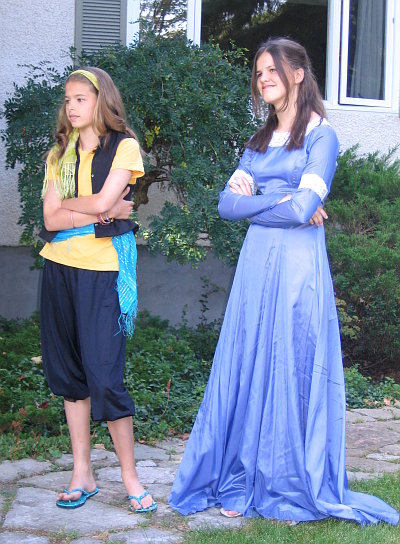
We returned to our friends’ cottage for a week of swimming, kayaking, card games and more school planning (the mums of course, not the kids!) It was very relaxing, as it always is; the days were sunny and warm, the nights crisp and the company refreshing. Both families returned to celebrate H’s birthday, which was a fancy dress party. L14 made alterations to a “Queen Guinevere” dress I had made years ago and turned it into one of the Princess Bride’s costumes. A12 created an Arabian nights style costume to be Aravis from “The Horse and His Boy”. (I’ll try and post a photo tomorrow)

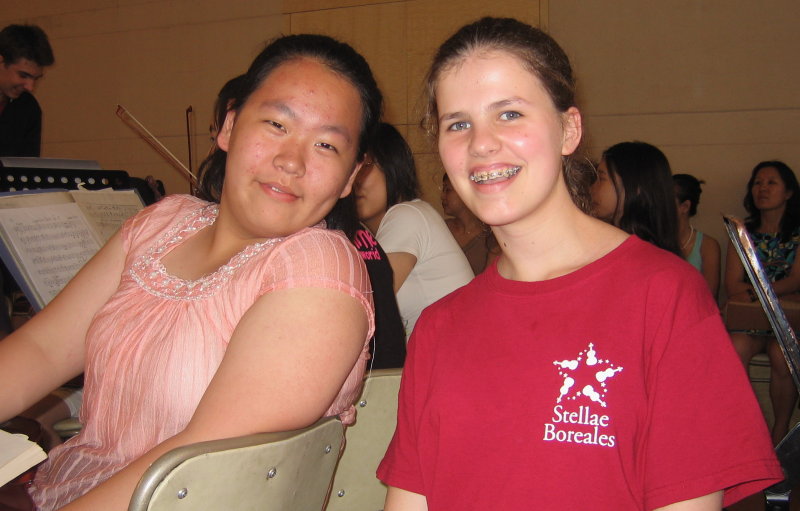
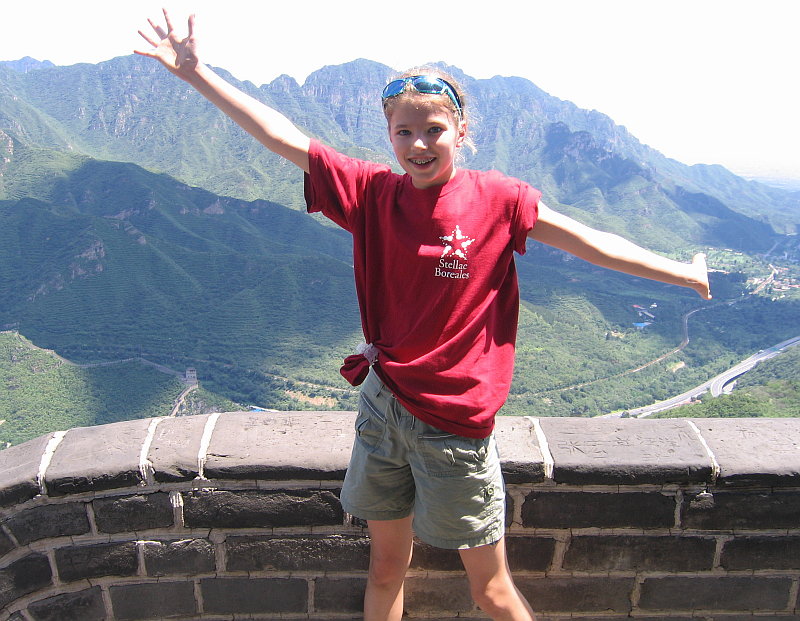
This past week has disappeared as I have tried to get the house to rights, attended several planning meetings and worked on details for the upcoming Stellae Boreales retreat. Tomorrow we begin a new year and according the levels here in Canada we have a highschooler, a junior highschooler and an elementary school student. I think everyone is looking forward to the year’s challenges, the first one being getting out of bed at a reasonable time tomorrow morning!

My Seventh Monsoon

At Christmas I received the book, My Seventh Monsoon, as a gift. I was delighted and intrigued as I know the author, Naomi Reed, but had no idea she was even writing a book. I do not know her well but other members of my family do and that is why my parents sent me the book.

My Seventh Monsoon is autobiographical but it is much more than just the story of Naomi’s life so far. The book is full of insight into the way God works in people’s lives to bring about his purposes. It is also about living in two very different cultures: Australia and Nepal. Naomi has deftly woven the strands of her book together to create a memoir which inspires, teaches and captivates.

Naomi’s years in Nepal with her husband inspired the title. Nepal’s seasons, particularly the intense monsoon season, set her thinking about the seasons of her own life, which gave her the framework for her book. Starting back in her childhood she identifies sixteen seasons, and shares with us not only the events and memories of each season, but also the lasting impact that season had on her life. She stresses that she was not aware while experiencing each season that it was just that: a season, a section of her life, a time which would eventually end, leaving her in a new place.

Her early life in a family which hiked, camped, skied was not a life of luxury but a life of adventure and simplicity. Of course she could not know then how it was preparing her for seasons in Nepal, hiking for hours and living with little. Leaving Australia to work as physiotherapists in Nepal was a dramatic move for her and Darren, her husband. Living in a country where the language, food, geography and weather were nothing like she had ever experienced created great feelings of inadequacy for Naomi and brought her to a point of greater trust in the Lord who is adequate in all situations.

As Naomi spent years in Nepal and years back in Australia her son and her husband faced life threatening emergencies. There were seasons of waiting, seasons of relief and refreshment. God was providing and enabling throughout them all. It is hard to describe how easy it was to connect with this book. My life is not that similar to Naomi’s and yet I found her writing totally relevant to me. We do not all have the same lessons to learn but we all face challenges at different times in our lives.   When growing through seasons of hardship and seasons of blessing  it is worth remembering that there is a time for every purpose under heaven.

Additional Note:  I found out this week that Naomi’s book was awarded second prize by the Australian Christian Literature Society in the 2008 Christian Book of the Year category.  I was also thrilled to see that Simon Holt‘s book, God Next Door, was awarded first prize.  Simon is a long time friend from our days in Glen Waverley.

Shanghai

Shanghai was our last port of call in China. As we drove in, we gazed at highrise as far as the eye could see. I still don’t know how far the city stretched as haze hung in the air restricting visibility.  Even though we came in on a weekend, the traffic on the freeway crept along.  We arrived at our hotel, a renovated 1930’s hotel close to the Bund.  After dinner we were taken to the Huangpu river where we waited to board a boat for a river cruise which would give us a view of Shanghai by night.  On one side of the river we saw the old buildings of the British concession and on the opposite bank we could see the new buildings of Shanghai, all less than 15 years old and many stretching up higher than 60 storeys.  All were lit in some way, with flashing neon lights or  images flashing on and off and climbing the building.  On the side of one building I saw the Mona Lisa and other paintings by great masters.

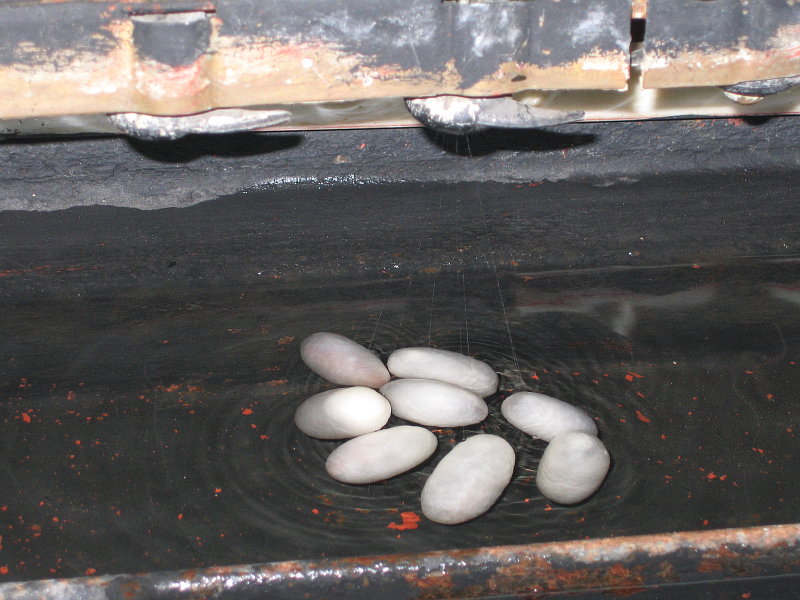
As we shopped in each city several people asked Ping, our guide, where the best place to buy silk was.  He kept telling us to wait until Shanghai, where we would visit a silk factory.   I bought what I believe is silk in Beijing at the Pearl Market, but I have no guarantee.  At the factory we were shown the steps in the silk making process.  I was intrigued to see threads from nine small cocoons being spun into a single, almost invisible thread.
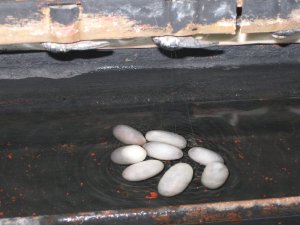
Silk cocoons are also made into light, warm comforters.  Double cocoons are selected and instead of finding an end to the thread and spinning it, each cocoon is stretched out over and over again.  Once the cocoon has been stretched out to resemble cobwebs it is laid down and more stretched cocoons laid one at a time over the top.  The result is a very light, but hopefully very warm doona (comforter, duvet).  I bought one but yet to use it.

Of course there was a showroom full of beautiful silk items.  I tried on a silk dress, the fitted style with the little collar, but unfortunately it didn’t fit over my hips.  I could have had one made and delivered to my hotel the next day but I decided against it.  A12 was given a beautiful gold and green scarf as a birthday present from the group.  After being called away from the silk factory we celebrated A12’s birthday with a delicious lunch and a mango mousse birthday cake organised by our guide PIng.  Everyone sang happy birthday and A12 was delighted with her scarf and a card signed by everyone.

While in Shanghai we participated in two exchanges with young Chinese musicians.  The first was at the Shanghai Children’s Palace, a facility which comes alive every weekend when hundreds of children arrive to attend music, art and other extra curricular activities.  We joined a young orchestra at their rehearsal.  We were able to play a few pieces for them and listen to some of theirs.  We discovered that Hungarian Dance was part of their repetoire so the Intermediate Performance Group joined in and everyone played together.  There was time at the end for a bit of conversation between the musicians.
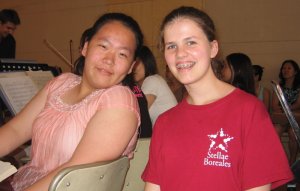
Naturally our group was relying on the Chinese students having more English than our two or three words of Chinese!  After the exchange we spent the remainder of the afternoon preparing for the evening concert at the same venue. The second exchange was at the Shanghai Conservatory where we were treated to some solo and group performances.  Both groups had versions of the Butterfly Concerto, which was a highlight of the afternoon.
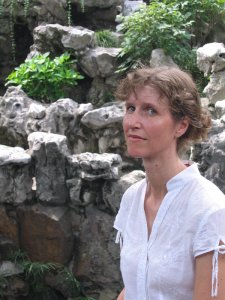
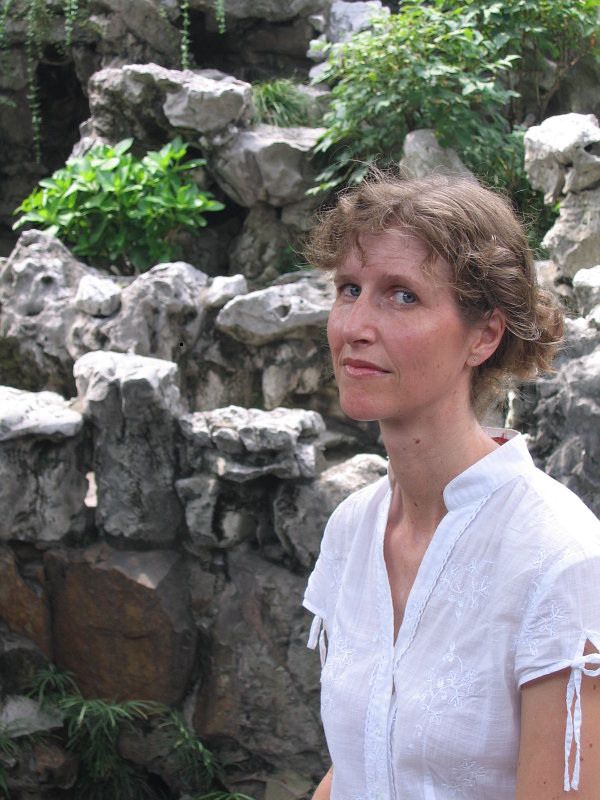
We spent one morning in the beautifully preserved old quarter of Shanghai. In the centre surrounded by walls is a garden, once privately owned but now enjoyed by everyone.  It was full of delightful plants, ponds, bridges and pavillions where the original owners did calligraphy, listened to concerts or sipped tea with guests.

I had several items I was determined to find while shopping in the old quarter, and for the first time during my time in China I found myself without musicians to keep track of.  We were told to meet outside Starbucks at a 11:30 so I made sure I knew where it was and set out to find the teapot, a kite and a couple more items.  The only problem was all the shops looked the same to me so I spent the first half of my time continually checking I still knew where Starbucks was!

After our experience haggling at the Pearl Market in Beijing I was a little better prepared for the bargaining process.  Each time I was ready to buy I decided on the price I wanted to pay and offered an amount way below it.  I always felt awful stating such a low price which was always met with howls of, “You joking, lady!”  Reaching a compromise was an exhausting but satisfying process.  While bargaing for Ben’s kite I was told over and over, “You hard bargainer, lady,” but I paid what I felt was reasonable.  It was, of course, impossible to tell the quality of the merchandise we were buying.

To my relief I found several shops devoted to tea, pots and cups.  I was able to browse in a few places before choosing a dark brown pot with a bamboo motif.  When I asked for matching tea cups, the vendor sent someone to another shop in the market to obtain six matching cups.  It arrived home safely and we were able to have a tea ceremony of our own!

Our last night in China was spent being amazed by the Chinese Acrobatic Show.  Jugglers, tumblers, acrobats and a magician held us spellbound for over an hour.  The finale was a display of five motorcyclists riding inside a metal sphere.  My favourite was a trapeze style display where two acrobats swung and performed suspended by lengths of silk twisted around their arms, legs or torso.
Hangzhou

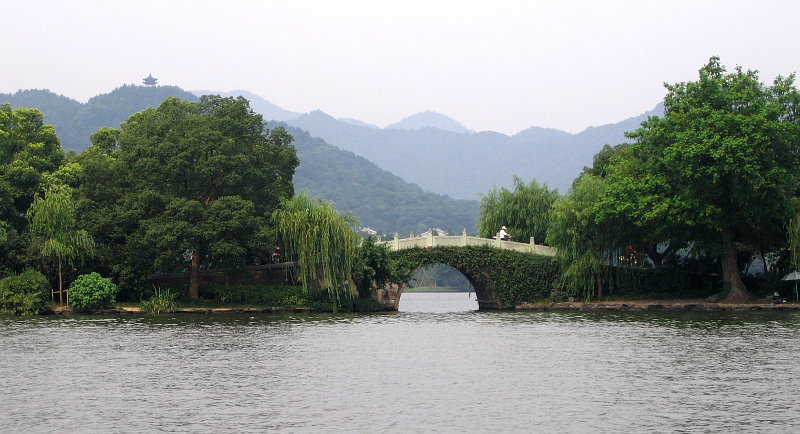
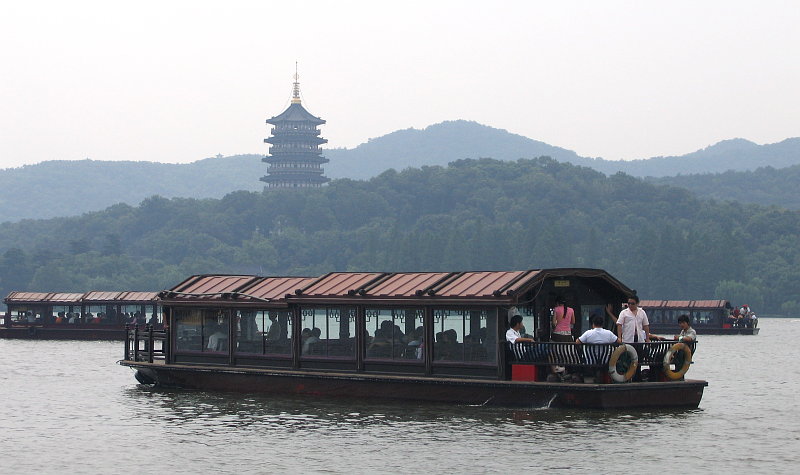
Even before we arrived in Hangzhou we were told to expect a beautiful city.  Several people mentioned that it was described by Marco Polo in the following terms,  “Above is Heaven, below are Suzhou and Hangzhou.” It is an attractive city, particularly around West Lake where we were taken for a walk and boat ride.  As our bus traveled past the lakeside residences we saw impressives houses surrounded by willows and gardens.  We saw the place where Chairman Mao had stayed forty times when he came to visit the city.  Our guide encouraged us to come again and again as Mao did.

It was hot and hazy as it was most days in China, but we did have the option of staying inside the airconditioned area.  To see the scenery though, you needed to be outside.  We saw many other barges like ours and on the shore and the islands we could see small and large pagodas.  After the ride was over we wandered through the park and admired the gardens, fish and peacocks.  What we really wanted to see though was the popsicle stand, which we found before boarding the bus and heading off to Longjing Tea plantation, where Dragon Well tea is made.

As we drove into the Dragon Well village our guide explained the transformation the village had undergone from being very poor and run down to being the successful and attractive village it is today.  We did not see very much of the tea plantation itself, we walked past a hillside of bushes, a man drying the tea in a huge wok over a burner and then into a room where we were given several types of tea and quite an elaborate sales pitch.

The tea is picked in spring, summer and fall, but only the small new leaves each time.  The spring tea is called daughter tea, the summer daughter-in-law tea, and the fall grandmother tea.  We tasted and smelled the different teas and watched as our hosts packed the tins of freshly made tea.  We were also told many tea customs and various used for tea and leaves.  Once again I saw the Yixing teapots but our guide suggested waiting once more until Shanghai where there would be more choices.

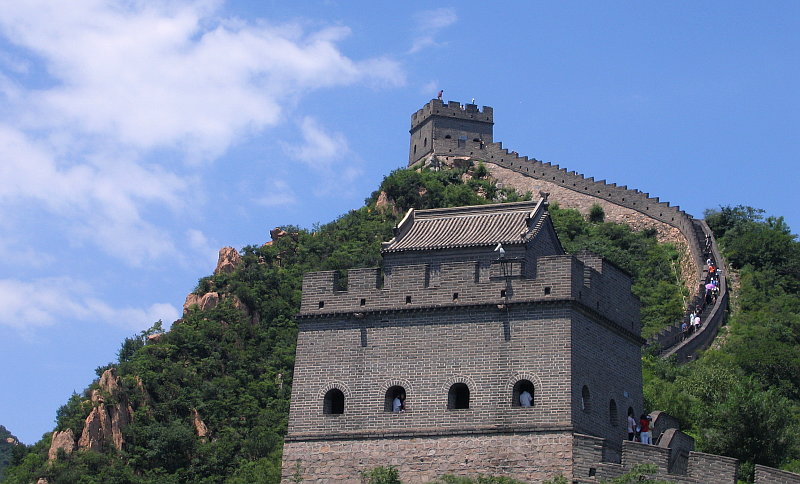
The afternoon was spent rehearsing for the evening’s concert after which we returned to our very comfortable hotel, perhaps the favourite for many people as it had a pool, lovely rooms and great meals.  Before our bus took us to Shanghai the next day we climbed the Pagoda of Six Harmonies.  It was steep but nothing like climbing the wall.  The view of Hangzhou was well worth the climb.  As we drove out of Hangzhou we watched as the city gave way to farmland and the style of dwelling changed once again.  I wish I had photos of the different styles we saw on the outskirts of each city; each one was unique in colour, shape and decoration.

Huangshan

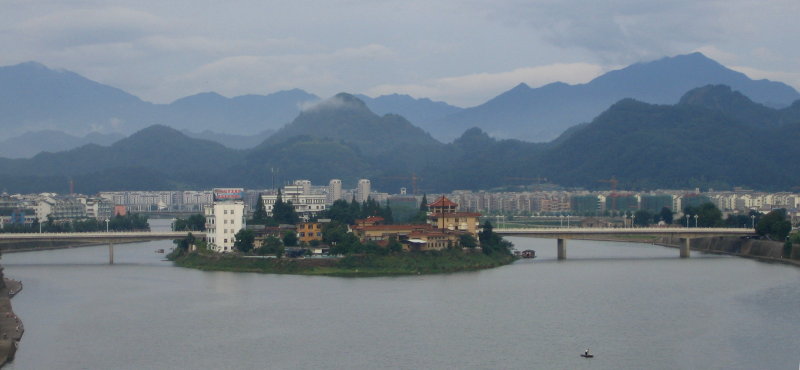
From Beijing we flew to Huangshan, a small city of 1.5 million.  The contrast with Beijing was striking.  We were no longer driving along plant lined highways.  Roads clogged with buses, cars and bicycles were replaced by streets filled with motor bikes, scooters and motorised bicycles, many that did not stop, they just tooted their horns and kept on going.  From my seat on the bus I saw rice fields, water buffalo and  vegetables laid out on the ground for sale.   Our main reason we visited Huangshan was to climb up Yellow Mountain, which we did the morning after we arrived.  As we travelled we saw, on either side of the road, crops planted up the sides of steep hills.  Tea, corn and all kinds of vegetables were growing on the hillsides and occasionally we would see a farmer tending them,  balanced on the  seemingly impossible slope.

The closer we got to the mountain the wetter and foggier it became until, when climbing up via the gondola, we could see only about ten metres ahead of us.  The path up the mountain was busy despite the weather.  Along with the tourists, there were porters carrying loads on poles over their shoulders.  This is the only method used to carry goods to and from the hotels up the mountain.  We enjoyed a delicious lunch in one of these hotels before half  the group headed back out into the weather to see more of the mountain.

They had a wild and exhilarating experience as the wind and rain continued.  Although the view was very limited it was possible to see the shape of the trees and mountains which are featured in many Chinese paintings.  (The next day as we walked through an art gallery we saw many paintings of the scenery we had barely glimpsed through the fog.)   As we neared the city again, our guide, Ping, instructed us to go straight to the dining room where we would all drink a magic drink ordered to make sure none of us came down with a cold.  The magic drink was hot coke with ginger!  No one came down with a cold; I’ll have to remember that remedy.


In the evening we participated in a lengthy and detailed tea ceremony involving green tea, black tea, chrysanthemum tea, jasmine tea, and oolong tea.  I wish I could remember all the steps, including the different ways ladies and gentlemen drink their tea, but I can recall only parts of the process.  It was there that I first saw Yixing teapots Andrew had suggested I look for.  Our guide had informed me that the best place to find a wide range would be Hangzhou, so I held off, hoping I wouldn’t regret it.   From there we wandered up and down the ancient street of Tunxi.  On each side of the street there were shops selling silk goods, pottery, inks, brushes and paper, artwork, food and many other souvenirs.  Once again we were expected to bargain over the prices and I watched and encouraged A11 as she made her purchases.

Before leaving Huangshan the next day we visited the Abacus museum, the ink factory and a city museum.  At each place we saw techniques, artifacts, art and architecture which were hundreds, or sometimes thousands of years old.  Our guides gave us loads of information, often explaining which dynasty the buildings, customs or items came from.  With so many details to take in it was impossible to retain it all but, the intricate detail and painstaking nature of much of the decoration impressed me again and again.